EDS, Raman, EBSD, or CL? A Decision Guide for the Benchtop SEM
Five analytical ports, one question: what are you actually asking of the sample? A decision guide to EDS, Raman, EBSD, CL — and EBIC — on a benchtop SEM.

Five analytical ports, one question: what are you actually asking of the sample? A decision guide to EDS, Raman, EBSD, CL — and EBIC — on a benchtop SEM.

Chamber capacity, stage travel, and height budget are three different numbers. The honest geometry of desktop SEM samples — plus mounting craft for awkward parts.
EBIC turns an SEM into an electrical-defect microscope: junctions light up, recombination sites go dark, and failures get localized. How it works and when to use it.
Resolution is the most quoted and least understood SEM spec. What 5 nm actually means, how kV and source change it, and when you truly need field emission.
What EBSD delivers on a benchtop SEM — grain size, texture, phase, strain — what sample prep really demands, and where field-emission systems still win.
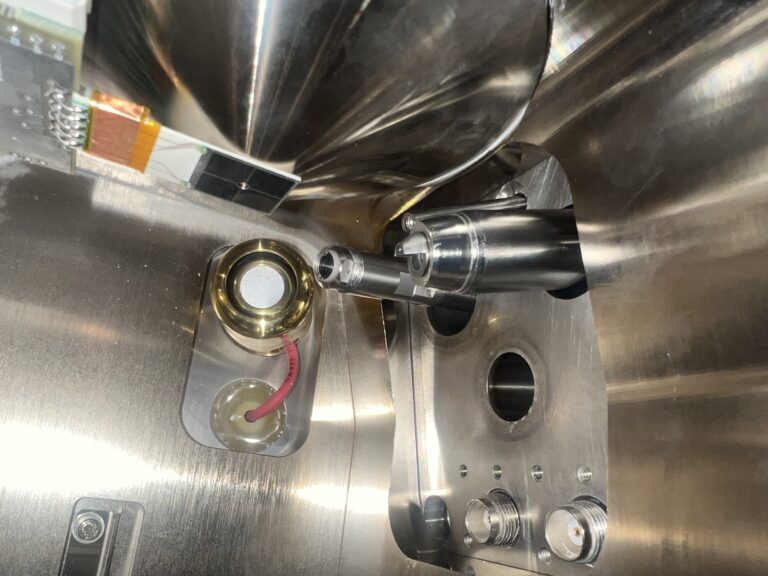
SEM shows shape, EDS shows elements — Raman tells you what the material actually is. Five questions only SEM-Raman answers, and the limits to know before you buy.

A desktop SEM's sticker price is only the start. What five years of filaments, service, and facilities actually cost — and where benchtop systems quietly save.
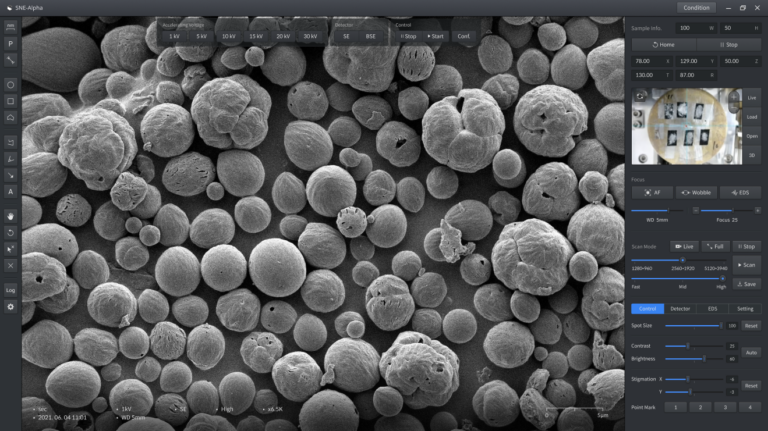
EDS makes elemental analysis feel pushbutton — and quietly wrong results feel right. Seven common SEM-EDS mistakes and how to catch each one.
Low-vacuum SEM and environmental SEM (ESEM) solve different problems. Learn how each works, what charging really is, and which one your samples actually need.
Answers to the most common questions about Raman spectroscopy and how it integrates with scanning electron microscopy for correlative chemical and morphological analysis.