

Environmental Science
Particulate analysis, microplastics, air quality, and environmental contamination studies
The SNE-Alpha desktop SEM is used by environmental scientists for microplastic identification, particulate matter analysis, soil and sediment characterization, and pollution source attribution. At 5nm resolution combined with EDS elemental analysis, it provides definitive morphological and compositional data for environmental samples. See full SNE-Alpha specifications →
Environmental science increasingly relies on microscopy to identify, characterize, and quantify pollutants at the particle level. From airborne particulates to microplastics in waterways, scanning electron microscopy with EDS provides the morphological and compositional data needed for environmental assessment and remediation.
The SNE-Alpha desktop SEM brings environmental analysis capabilities to field stations, regulatory labs, and research institutions. Its compact design and ease of operation make it accessible for routine monitoring and investigative studies.
Key Environmental Applications
- Microplastics Analysis: Identify and characterize plastic particles in water, sediment, and biological samples. Distinguish polymer types using morphology and EDS
- Air Quality Monitoring: Characterize particulate matter (PM10, PM2.5) by size, shape, and composition for source identification
- Asbestos Identification: Image fiber morphology and confirm composition with EDS for regulatory compliance
- Soil Contamination: Identify heavy metal particles and characterize contaminated soil structure
- Water Treatment: Evaluate filter media, membrane surfaces, and treatment effectiveness
- Dust Analysis: Source apportionment of industrial, agricultural, and natural dust particles
Microplastics Research
Microplastics have become a major focus of environmental research. SEM-EDS enables:
- Particle Identification: Distinguish plastics from natural particles by surface texture and morphology
- Size Measurement: Accurate sizing from millimeters down to micrometers
- Weathering Assessment: Characterize surface degradation and fragmentation patterns
- Polymer Typing: EDS helps identify inorganic additives characteristic of specific polymers
Environmental SEM Images
Sample images captured with the SNE-Alpha desktop SEM.
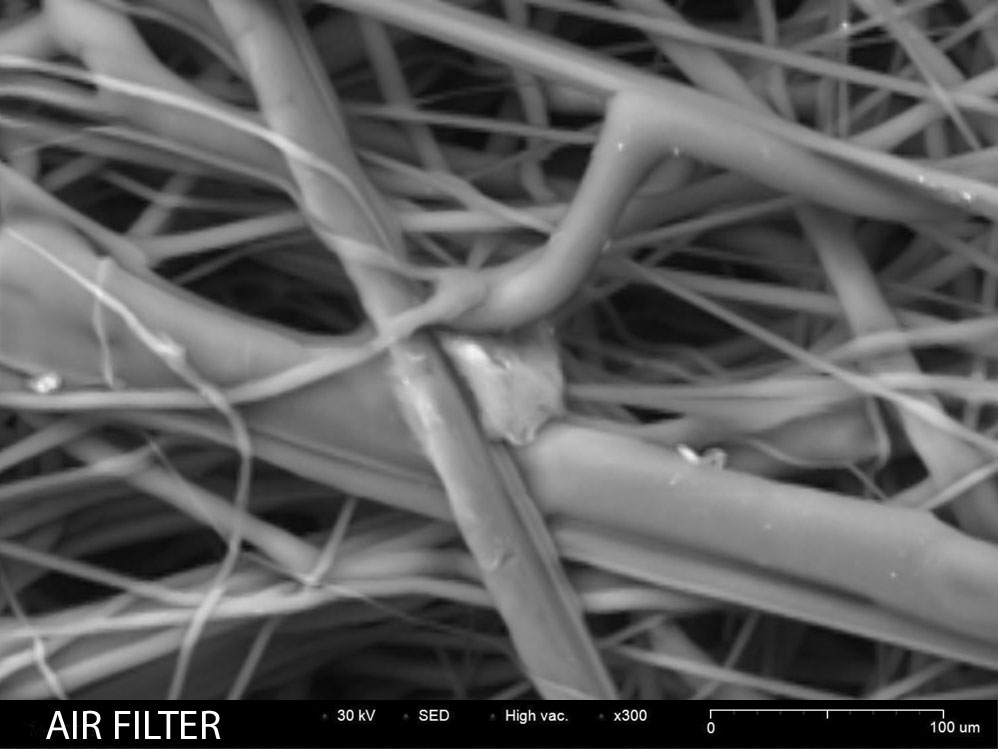
Air Filter Media
Filter material for particulate capture analysis
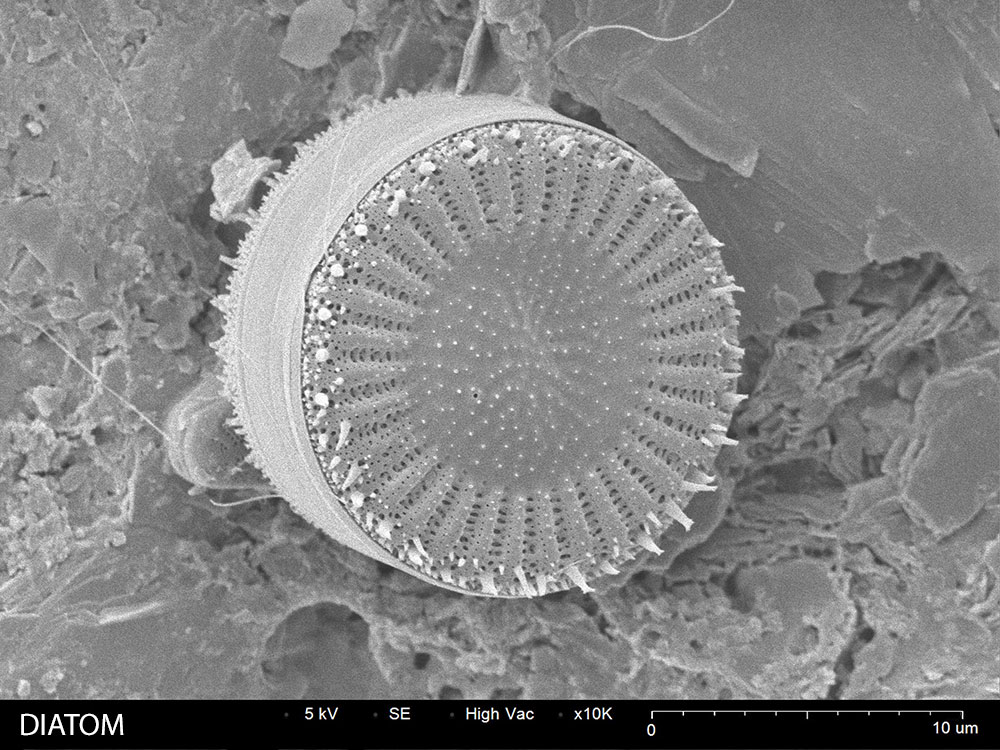
Diatom
Aquatic microorganism for water quality assessment
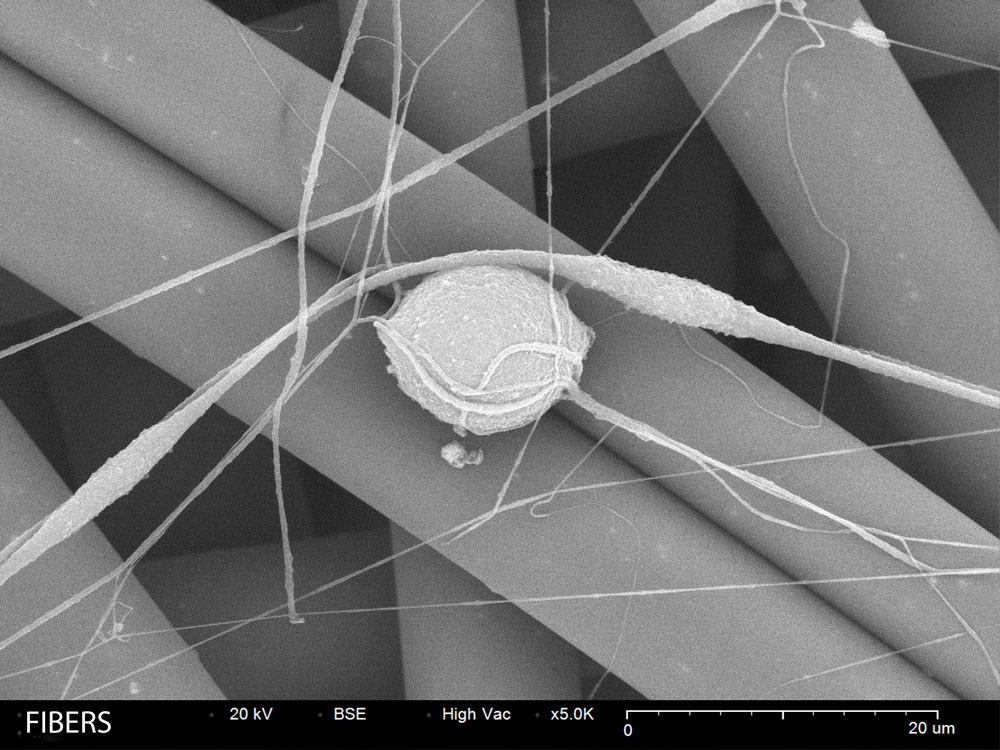
Microfibers
Textile microfibers from environmental samples
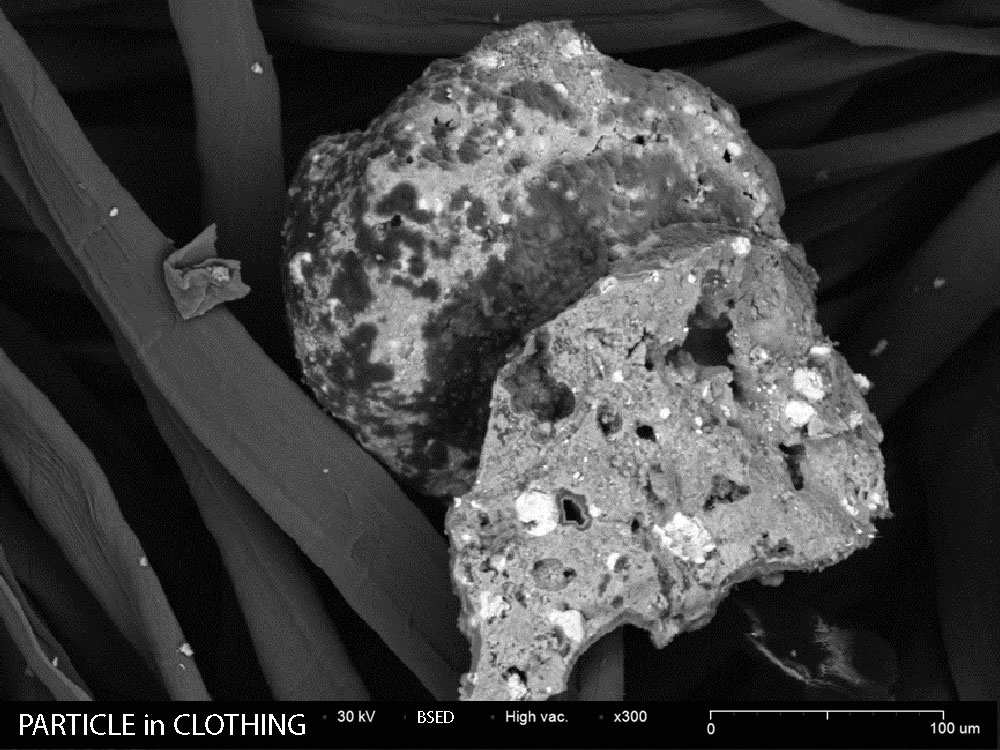
Particle Analysis
Trace particle identification in environmental samples
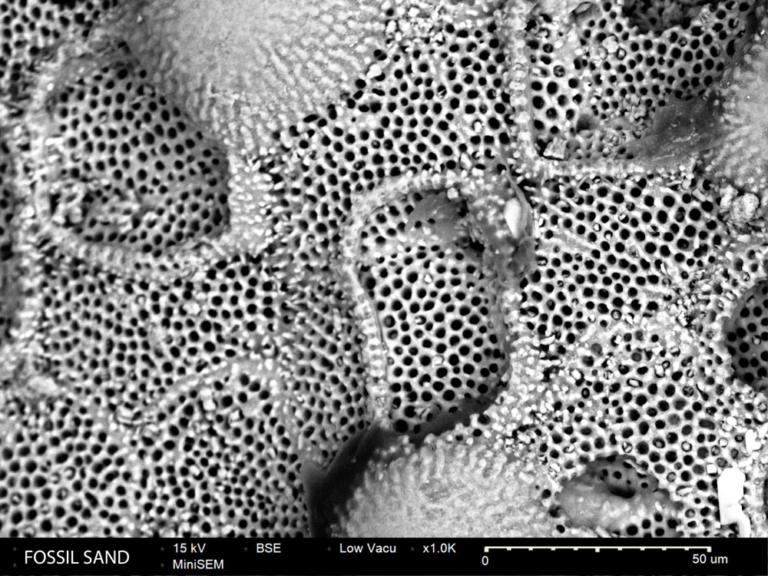
Sediment Analysis
Sand and sediment particle characterization
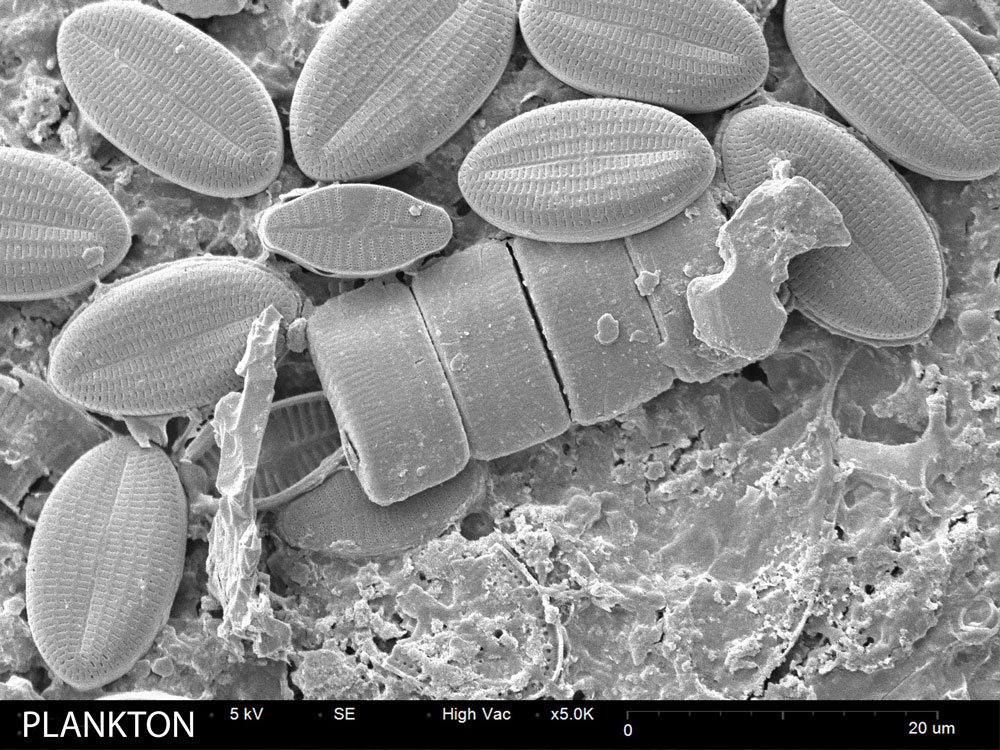
Plankton
Marine plankton for aquatic ecosystem studies
Analysis Capabilities
Particle Identification
Classify particles by morphology and composition for source apportionment and regulatory compliance.
EDS Mapping
Visualize element distribution to identify contamination sources and characterize complex particles.
Size Analysis
Measure particle dimensions from SEM images for size distribution and regulatory reporting.
Surface Weathering
Characterize degradation patterns on plastics and other materials exposed to environmental conditions.
Recommended Equipment
SNE-Alpha Desktop SEM
Compact, high-resolution scanning electron microscope ideal for research and quality control applications.
Bruker XFlash EDS
Energy dispersive X-ray spectroscopy for elemental analysis and material identification.
MCM-100 Sputter Coater
Prepare non-conductive samples with gold or platinum coatings for optimal SEM imaging.
Related Applications
Resources
Environmental Analysis Solutions
See how the SNE-Alpha can support your environmental monitoring and research programs.